

1. Inleiding – wat is Steen in Rol?
Steen in Rol, ook wel stenen fineer of stenen behang genoemd, is een bekledingsmateriaal dat ontstaat uit een echte laag natuursteen,
die met behulp van hars en glasvezel van een steenblok wordt losgetrokken. Het resultaat is een ultradunne plaat (ca. 2–3 mm) die de textuur, kleur, structuur en uitstraling van natuursteen behoudt,
terwijl hij licht, flexibel, eenvoudig te installeren en bestand is tegen water en weersinvloeden.
Stenen fineer combineert de authentieke uitstraling van natuursteen met moderne technologie, waardoor het product toegankelijk is voor iedereen – zelfs voor mensen zonder bouwervaring.
2. Hoe wordt Steen in Rol gemaakt? – Productietechnologie
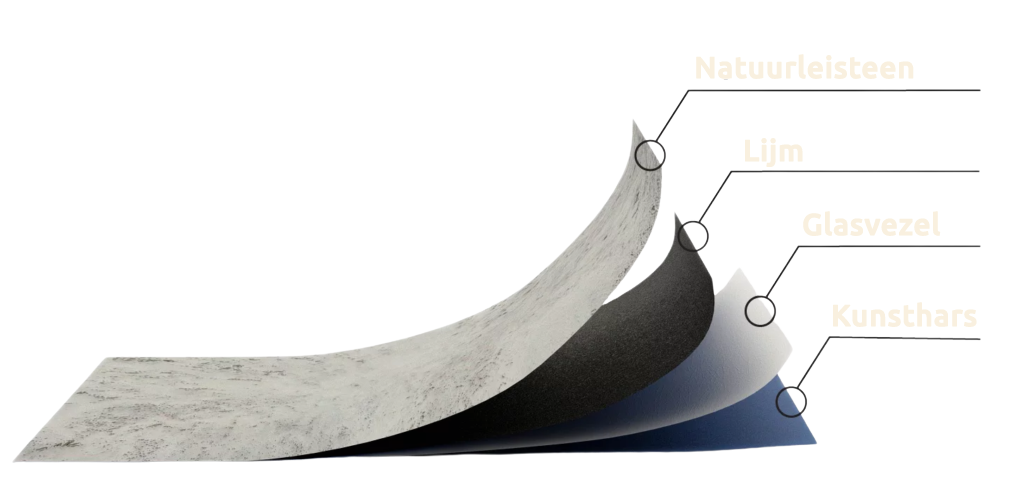
Het productieproces bestaat uit vier kernlagen:
- Natuurleisteen – 100% echte steenlaag
- Hechtlaag – verbindt steen met vezels
- Glasvezel – zorgt voor flexibiliteit en sterkte
- Epoxyhars – stabiliseert de structuur en beschermt tegen water
Hoe ontstaat de plaat?
Het leisteenblok wordt verwarmd en vervolgens bedekt met hars, lijm en glasvezel. Na afkoeling trekt de hars een dunne laag steen los, waardoor de uiteindelijke fineerplaat ontstaat.
3. Eigenschappen en technische parameters
- Dikte: 2–3 mm
- Gewicht: ca. 2,5 kg/m²
- Flexibiliteit: montage op bogen en kolommen
- Vochtbestendigheid: zeer hoog
- Hittebestendigheid: geschikt voor open haarden
- UV-bestendigheid: ideaal voor gevels
Belangrijkste kenmerken:
- Natuurlijke, unieke uitstraling
- Lichtgewicht en eenvoudig vervoer
- Eenvoudige montage
- Mogelijkheid tot installatie op oude tegels
- Bestand tegen barsten en weersomstandigheden
4. Toepassingen van Steen in Rol – waar werkt het het beste?
Interieurtoepassingen:
- Decoratieve wanden (woonkamer, tv-wand)
- Gangen en trappenhuizen
- Badkamers – ook onder de douche
- Keukens – tussen aanrecht en bovenkasten
- Open haarden en kachels
- Meubels, deuren, keukeneilanden
Exterieurtoepassingen:
- Gevels
- Hekken en muurtjes
- Terrassen, ingangen, overkappingen
- Buitenzijde van balkons
5. Soorten stenen fineer – kleuren en structuren
- Leisteen: grijs, zwart, grafiet, bruin
- Kwartsiet: natuurlijke glans, glinsteringen
- Zandsteen: beige, bruin, geel
- Travertin: duidelijke adering
- Rustiek leisteen: sterke texturen
6. Montage van Steen in Rol – praktische gids
Benodigde gereedschappen:
- Haakse slijper met diamantschijf
- Aandrukroller
- Vertande spaan
- Polyurethaanlijm
STAP 1 – Voorbereiding van de ondergrond: schoon, ontvet, mag oneffen zijn; montage op oude tegels zonder breekwerk.
STAP 2 – Snijden: slijpmachine, zaag of stevig mes.
STAP 3 – Lijmen: lijm op de muur of op het fineer, verdelen met spaan, aandrukken met roller.
STAP 4 – Voegen & natte zones: droog – geen voeg nodig; nat – siliconen + impregnering.
STAP 5 – Impregnatie: Fila MP90, Fila FOB, Stone Plus, Fila Satin – herhalen om de 6–12 maanden.
7. Vergelijking – Steen in Rol vs. Stenen Tegels
| Kenmerk | Steen in Rol | Stenen Tegels |
| Dikte | 2–3 mm | 10–20 mm |
| Gewicht | ca. 2,5 kg/m² | 25–50 kg/m² |
| Montage | Snel, zonder voegen | Moeilijker, vereist voegen |
| Flexibiliteit | Ja | Nee |
| Transport | Licht en goedkoop | Zwaar en duur |
8. Hoe onderhoud je Steen in Rol?
- Reinigen met een zachte doek
- Vermijd sterke schoonmaakmiddelen
- Impregneren in natte zones 1–2 keer per jaar
- Niet slaan met scherpe voorwerpen tegen de randen
9. Veelgestelde vragen (FAQ)
- Is het waterbestendig? Ja, na impregnatie.
- Geschikt voor onder de douche? Ja.
- Geschikt voor een open haard? Ja.
- Voor gevels? Ja – met buitenlijm.
- Installatie op oude tegels? Ja.
- Is het zwaar? Nee.
- Is het duurzaam? Zeer – UV-, water- en slagbestendig.
10. Hoe verzenden wij Steen in Rol?
Kleine formaten worden vlak verstuurd, grotere worden opgerold en stevig verpakt. De pakketten zijn goed beschermd tegen schade en de levering duurt meestal enkele werkdagen.